


Why Must Baking Ovens and Spray Painting Lines Use High Temp Resitance Air Filters?
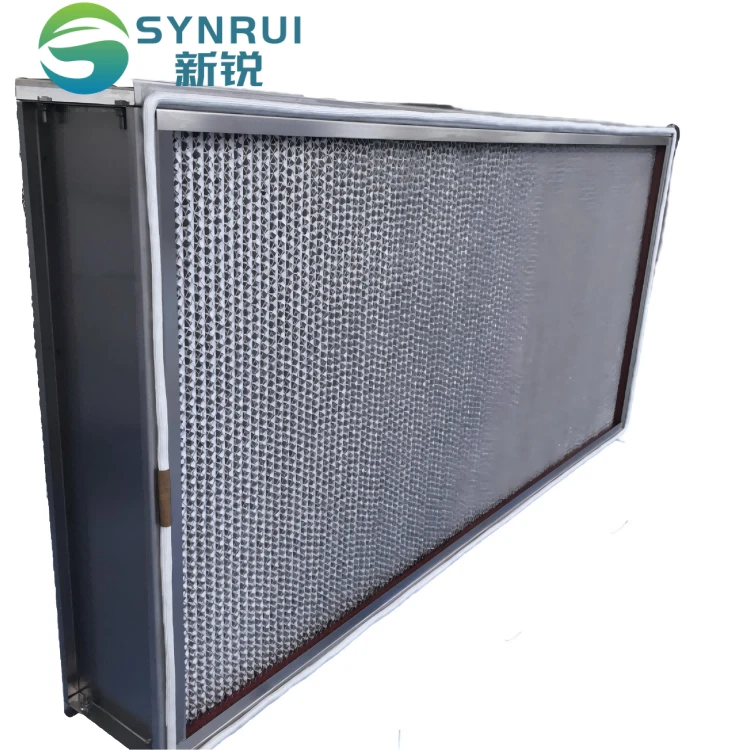
Compared to ordinary HVAC filters, baking ovens and spray painting lines operate at higher temperatures, and the air contains oil mist, dust, and particulate matter.
Therefore, filters with the following characteristics must be selected:
1.Stable high-temperature resistance (commonly available in 170℃, 250℃, and 300℃ ratings)
2.A stable, non-deformable structure that maintains filtration efficiency during prolonged high-temperature operation
3.Low resistance to reduce energy consumption in baking ovens and spray painting lines
4.Compatibility with industrial air filtration systems (HVAC)
For automotive spray lines, metal coating production, and food drying lines, these filters are indispensable core components.
Understanding the Classification of High-Temperature Filters
To ensure stable operation of spraying lines and baking oven systems, it is necessary to understand the common types of high-temperature filters

High Temp Synthetic Fiber Oven Filter
Used for initial interception of dust and particles

High Temp Medium Filter
Increases system particle interception and extends overall service life
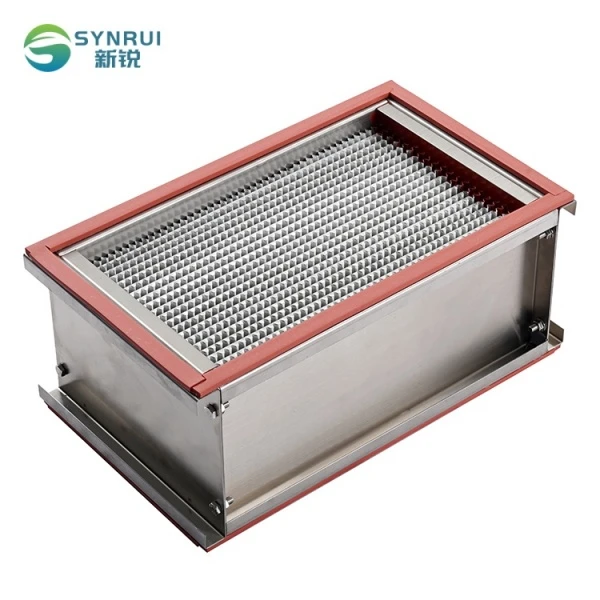
High Temp Deep Pleat HEPA Filter
Used in spraying environments with strict air cleanliness requirements
Different process stages require different filtration levels and temperature resistance. Before purchasing, it is essential to select the appropriate filter according to temperature, airflow, and cleanliness requirements.
Key Parameters for High-Temperature Filter Selection
In baking oven and spraying line projects, high-quality high-temperature filters should possess the following characteristics:
Temperature Resistance Rating
Common ratings include 170℃, 240℃, 250℃, 300℃, and 350℃ (for special applications).
The filter's temperature resistance must match the actual oven temperature; otherwise, risks such as melting, deformation, or fiberglass shedding may occur.
Filtration Efficiency
Common grades include:
Pre-filter: G2–G4
Medium-efficiency: M5–M6
High-efficiency: H13–H14
Spray coating lines typically require higher particle control to avoid coating defects.
Airflow and Resistance
Lower resistance reduces energy consumption in baking ovens and HVAC systems.
Low-resistance filters significantly reduce energy waste and improve spray line operational stability.
Structure and Materials
Temperature-resistant fiberglass filter media, metal frames, and high-temperature adhesives (such as silicone or ceramic adhesives) are key components.
Substandard materials may crack or delaminate under high temperatures, posing contamination risks.
Five Common Misconceptions to Avoid in Procurement
1. Misconception ①: Focusing Only on Temperature Resistance While Ignoring Structural Materials
Many suppliers claim their filters can withstand 300℃, but in real use, poor-quality filter media or inadequate adhesive bonding cause them to fail within hours.
In contrast, SYNRUI filters made in china use high-grade filter media and advanced adhesive technology to ensure stable high-temperature performance and extended lifecycle.
2. Misconception ②: Ignoring Initial Resistance, Leading to High Energy Consumption
Higher resistance places a greater load on fans in baking ovens and spray painting lines, significantly increasing electricity consumption.
Real cases have shown that some factories paid tens of thousands of yuan in additional electricity costs within six months due to excessively high system resistance.
China SYNRUI's high-temperature air filters effectively reduce system resistance, maintain smooth airflow, and deliver clear energy-saving benefits.
3.Misconception ③: Ignoring Actual Operating Temperature
Temperature fluctuations are more critical than nominal temperature ratings. Sudden temperature spikes may deform the filter structure, reducing filtration efficiency.
Customized SYNRUI filters are engineered to withstand temperature fluctuations, ensuring stable performance even in demanding environments.
4. Misconception④ Focusing Only on Price and Ignoring Lifespan
Low-cost filters often suffer from short service life, brittle filter media, and fast-rising resistance-leading to higher total costs.
SYNRUI filters suppliers avoid these problems through optimized materials and construction, ensuring durability and long-term cost efficiency.
5. Misconception ⑤: Ignoring System Compatibility
Baking ovens and coating lines require compatibility in airflow, installation dimensions, sealing, and HVAC pressure parameters.
A poorly matched filter can cause air leakage, deformation, or long-term performance degradation.
SYNRUI filters factory are specifically engineered to meet these compatibility requirements.
How to Choose the Right High-Temperature Filter?
Select the correct temperature resistance rating (120–350℃) based on process requirements
Choose the proper filtration efficiency (medium-efficiency or HEPA) according to coating needs
Use low-resistance designs to reduce oven energy consumption
Verify dimensions, flanges, and sealing methods to ensure system compatibility
Choose a qualified manufacturer with complete testing reports (EN1822, ISO standards)
In the long run, the quality of high-temperature filters directly impacts coating line stability, energy costs, and product yield.

Conclusion

Choosing the right high temp resitance air filter manufacturers means choosing a future with lower energy consumption and higher operational stability for your coating line and baking oven system.
Avoiding the five procurement mistakes above helps factories reduce energy use, prevent equipment damage, and lower filter replacement costs.
For factories dedicated to improving production efficiency and air quality, selecting the right it is one of the most valuable investments.


