


Polytetrafluoroethylene, commonly known as PTFE, is a remarkable synthetic fluoropolymer of tetrafluoroethylene. It is well - known for its non - stick properties, high chemical resistance, and excellent dielectric strength. As a PTFE supplier, I am delighted to share the fascinating process of how PTFE is made.
1. Raw Material Preparation
The journey of PTFE production begins with the acquisition of raw materials. The primary raw material for PTFE is tetrafluoroethylene (TFE). TFE is synthesized through a multi - step chemical process. It starts with the reaction of chloroform (CHCl₃) with hydrofluoric acid (HF) in the presence of a catalyst. This reaction produces chlorodifluoromethane (CHClF₂), also known as Freon - 22.
[
CHCl_{3}+2HF\xrightarrow{\text{catalyst}}CHClF_{2}+2HCl
]

The chlorodifluoromethane is then pyrolyzed at high temperatures (around 600 - 800°C) in a furnace. During pyrolysis, the chlorodifluoromethane breaks down into tetrafluoroethylene (TFE) and hydrogen chloride (HCl).
[
2CHClF_{2}\xrightarrow{600 - 800^{\circ}C}C_{2}F_{4}+2HCl
]
The separation of TFE from the reaction mixture is a crucial step. It is often achieved through a combination of cooling, compression, and distillation processes to obtain pure TFE gas, which is the building block for PTFE.
2. Polymerization
Once the pure TFE gas is obtained, it undergoes a polymerization process. There are two main methods for polymerizing TFE to form PTFE: suspension polymerization and dispersion polymerization.
Suspension Polymerization
In suspension polymerization, TFE gas is introduced into a reactor filled with water and a suspending agent. A free - radical initiator, such as an organic peroxide, is added to start the polymerization reaction. The initiator decomposes, generating free radicals that react with the TFE molecules.
The reaction is exothermic, so careful temperature control is necessary to ensure the proper formation of PTFE particles. The TFE molecules link together to form long polymer chains, and these chains aggregate to form PTFE particles suspended in the water. After the reaction is complete, the PTFE particles are separated from the water by filtration or centrifugation, washed to remove impurities, and then dried.
Dispersion Polymerization
Dispersion polymerization is another important method for making PTFE. In this process, TFE gas is also polymerized in an aqueous medium, but in the presence of a surfactant and a different type of initiator. The surfactant helps to keep the growing PTFE particles dispersed in the water, forming a stable colloidal dispersion.
The resulting PTFE dispersion contains tiny PTFE particles (usually in the range of 0.2 - 0.3 micrometers in diameter) suspended in the water. This dispersion can be used directly in some applications, such as coatings, or it can be coagulated to obtain PTFE resin. Coagulation is typically achieved by adding a salt or an acid to the dispersion, causing the PTFE particles to agglomerate and separate from the water.
3. Post - Polymerization Processing
After polymerization, the PTFE resin or dispersion needs to go through some post - processing steps to make it suitable for different applications.
Molding and Shaping
If the PTFE is in resin form, it can be molded into various shapes through methods such as compression molding, extrusion, and injection molding. In compression molding, the PTFE powder is placed in a mold under high pressure and heated to a temperature above its melting point (around 327°C). This causes the powder particles to fuse together, forming a solid object with the desired shape.
Extrusion is used to produce continuous PTFE products, such as rods, tubes, and profiles. The PTFE resin is fed into an extruder, where it is heated and forced through a die to form the desired cross - sectional shape. Injection molding is similar to the process used for other thermoplastics, where the molten PTFE is injected into a mold cavity under high pressure to create complex - shaped parts.
Film and Sheet Production
For PTFE films and sheets, the dispersion or resin can be processed through various techniques. One common method is the casting process. A PTFE dispersion is cast onto a flat surface, such as a stainless - steel belt, and then heated to remove the water and fuse the PTFE particles together. This results in a thin PTFE film or sheet with uniform thickness and excellent properties.
4. Surface Treatment and Finishing
PTFE has a very low surface energy, which can make it difficult to bond to other materials. To improve its adhesion properties, surface treatment may be required. One common surface treatment method is plasma treatment, where the PTFE surface is exposed to a plasma of reactive gases. The plasma modifies the surface chemistry of the PTFE, creating polar functional groups that enhance its adhesion to other materials.
Another method is chemical etching, which involves treating the PTFE surface with a chemical solution to roughen the surface and increase its surface area, thereby improving adhesion.
Applications and the Role of PTFE Filter Media
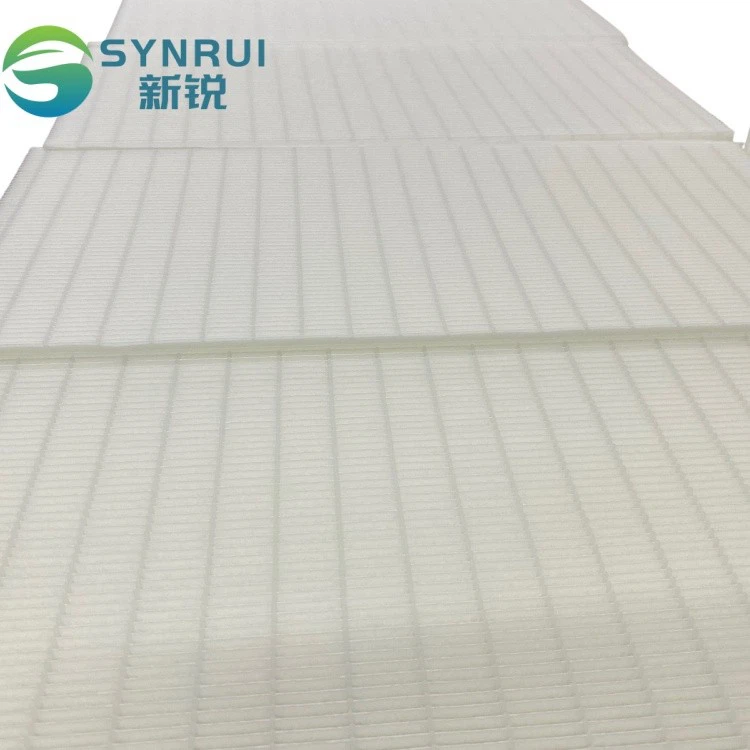
PTFE has a wide range of applications due to its unique properties. In the field of filtration, PTFE is highly valued. PTEF Filter Media is a prime example of its application. PTFE filter media offers excellent chemical resistance, high temperature resistance, and low friction, making it ideal for filtering aggressive chemicals, hot gases, and particulate matter in various industrial processes.
The high porosity and fine pore structure of PTFE filter media allow for efficient filtration while maintaining a high flow rate. It can capture small particles with high efficiency, which is crucial for applications such as air purification in semiconductor manufacturing plants, chemical processing, and power generation.
Conclusion
In conclusion, the production of PTFE is a complex and well - controlled process that involves several key steps, from raw material preparation to post - processing and surface treatment. As a PTFE supplier, I am committed to providing high - quality PTFE products that meet the diverse needs of our customers.
Whether you are in the filtration industry, the chemical processing sector, or any other field that requires the unique properties of PTFE, we are here to offer you the best solutions. If you are interested in purchasing PTFE products for your specific applications, please feel free to contact us for further discussions and procurement negotiations. We look forward to working with you to achieve your business goals.
References
- Billmeyer, F. W. (1984). Textbook of Polymer Science. John Wiley & Sons.
- Odian, G. (2004). Principles of Polymerization. John Wiley & Sons.
- Tatemoto, M. (1988). "Polymerization of Fluoroolefins and Related Monomers". In Semlyen, J. A. (ed.). Comprehensive Polymer Science. Pergamon Press.


