


Hey there! As a clean bench supplier, I've had my fair share of questions about clean bench classification according to ISO standards. So, let's dive right in and break it down for you.
First off, ISO standards play a crucial role in defining the cleanliness levels and performance requirements for clean benches. These standards ensure that clean benches meet specific criteria, which is super important for industries where maintaining a clean environment is a must, like pharmaceuticals, electronics, and biotechnology.
ISO Classifications for Clean Benches
The ISO standards classify clean benches based on the concentration of airborne particles per cubic meter of air. The most common ISO classes for clean benches range from ISO 3 to ISO 8, with ISO 3 being the cleanest and ISO 8 being the least clean.
ISO 3
This is the highest level of cleanliness. Clean benches classified as ISO 3 are designed to maintain an environment where the concentration of particles larger than 0.1 micrometers is extremely low. These benches are typically used in industries where even the tiniest particle can cause significant problems, such as semiconductor manufacturing. In semiconductor production, a single particle can damage a microchip, so having a clean bench with ISO 3 classification is essential.
ISO 4
Clean benches with an ISO 4 classification are also very clean. They are suitable for applications where a high level of particle control is required, but not as stringent as ISO 3. For example, some high - precision electronics assembly processes might use ISO 4 clean benches. These benches can effectively minimize the risk of particle contamination during the assembly of sensitive electronic components.
ISO 5
ISO 5 clean benches are commonly used in pharmaceutical and biotechnology research. They provide a clean environment for activities like cell culture, where any contamination can ruin an experiment. The lower particle count in an ISO 5 clean bench helps to ensure the integrity of biological samples and the accuracy of research results.
ISO 6
This classification is suitable for general laboratory work where a moderately clean environment is needed. For instance, in a chemistry laboratory, an ISO 6 clean bench can be used for preparing samples or conducting certain chemical reactions. It helps to reduce the risk of airborne particles interfering with the chemical processes.
ISO 7
ISO 7 clean benches are often used in industrial settings where a basic level of cleanliness is required. They can be found in some manufacturing processes where the presence of a small number of particles won't cause major issues but still need to be controlled. For example, in the production of some consumer electronics, an ISO 7 clean bench can be used to assemble components.
ISO 8
The least clean of the common ISO classifications for clean benches, ISO 8 is still useful in environments where a minimal level of particle control is necessary. It can be used in some educational laboratories or in industries where the product is less sensitive to particle contamination.
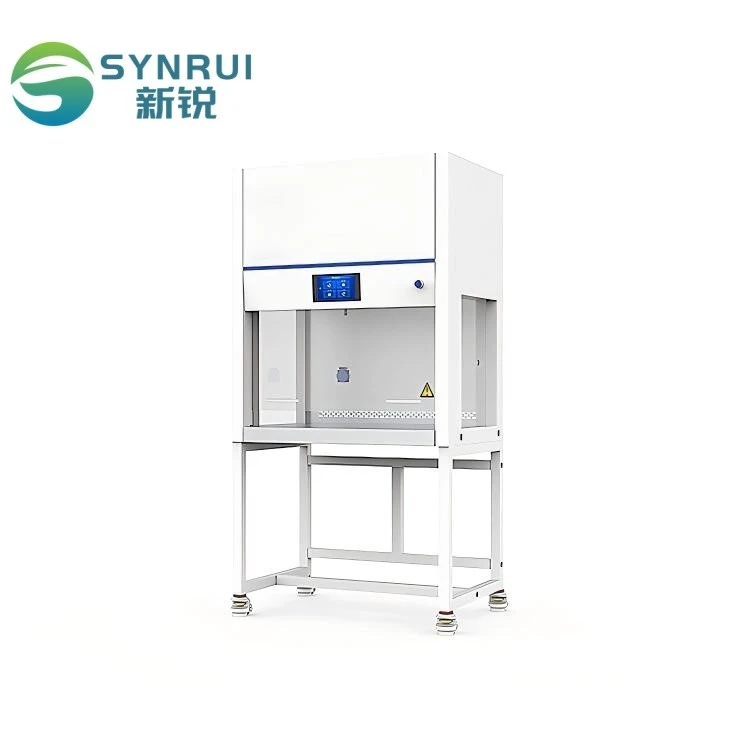

How Clean Benches Achieve ISO Classifications
Clean benches achieve these ISO classifications through a combination of filtration systems and airflow control.
Filtration Systems
Most clean benches use High - Efficiency Particulate Air (HEPA) filters or Ultra - Low Penetration Air (ULPA) filters. HEPA filters are capable of removing at least 99.97% of particles that are 0.3 micrometers in size. ULPA filters are even more efficient, removing up to 99.999% of particles as small as 0.12 micrometers. These filters trap particles as the air passes through them, ensuring that the air inside the clean bench meets the required ISO classification.
Airflow Control
There are two main types of airflow in clean benches: laminar and turbulent.
- Laminar Flow: In a laminar flow clean bench, the air moves in a uniform, parallel direction at a constant speed. There are two subtypes: horizontal laminar flow and vertical laminar flow. Horizontal laminar flow clean benches blow air horizontally across the work surface, while vertical laminar flow clean benches blow air vertically downwards. Laminar flow helps to prevent the recirculation of contaminated air and ensures that particles are carried away from the work area.
- Turbulent Flow: Turbulent flow clean benches, also known as non - laminar flow clean benches, create a more chaotic airflow pattern. They mix the air inside the bench to dilute and remove contaminants. While they are not as effective as laminar flow clean benches in maintaining a uniform clean environment, they are still suitable for some applications where a lower level of cleanliness is acceptable.
Why ISO Classifications Matter for Your Business
As a clean bench supplier, I've seen firsthand how important it is for businesses to choose the right ISO - classified clean bench.
- Product Quality: Using a clean bench with the appropriate ISO classification can significantly improve the quality of your products. In industries like pharmaceuticals, a clean environment is essential to ensure the safety and efficacy of drugs. A clean bench that meets the required ISO standard can prevent contamination and ensure that the final product meets regulatory requirements.
- Research Accuracy: In research laboratories, a clean bench with the right ISO classification is crucial for obtaining accurate results. Contamination can lead to false positives or negatives in experiments, wasting time and resources. By using a clean bench that maintains the appropriate level of cleanliness, researchers can have more confidence in their data.
- Compliance: Many industries are subject to strict regulations regarding cleanliness and contamination control. Using a clean bench that meets the relevant ISO standards can help your business stay compliant with these regulations. This can save you from potential fines and legal issues.
Our Clean Benches and ISO Classifications
At our company, we offer a wide range of clean benches that are classified according to ISO standards. Whether you need an ISO 3 clean bench for high - tech semiconductor manufacturing or an ISO 8 clean bench for a basic educational laboratory, we've got you covered.
Our clean benches are designed with the latest filtration technology and airflow control systems to ensure that they meet or exceed the specified ISO classifications. We also provide comprehensive installation and maintenance services to keep your clean bench operating at its best.
If you're interested in learning more about our Cleanroom Workbench, we'd be more than happy to assist you. Our team of experts can help you choose the right clean bench for your specific needs and budget.
Contact Us for Your Clean Bench Needs
If you're in the market for a clean bench, don't hesitate to get in touch with us. We understand that every business has unique requirements, and we're committed to providing you with the best solution. Whether you have questions about ISO classifications, need a custom - designed clean bench, or are ready to place an order, we're here to help.
Just reach out to us, and we'll start the conversation about how our clean benches can improve your operations. We look forward to working with you to create a cleaner, more productive work environment.
References
- ISO 14644 - 1:2015, Cleanrooms and associated controlled environments — Part 1: Classification of air cleanliness
- "Cleanroom Technology" by Peter H. Kunesh
So, there you have it! A comprehensive look at clean bench classification according to ISO standards. I hope this blog has been helpful to you, and if you have any more questions, feel free to drop us a line.


