


What is the Hardness of PTFE?
As a PTFE supplier, I've encountered numerous inquiries regarding the properties of PTFE, and one question that frequently surfaces is about its hardness. Polytetrafluoroethylene, commonly known as PTFE, is a remarkable synthetic fluoropolymer with a wide range of applications, and understanding its hardness is crucial for many industries.
Understanding PTFE
PTFE was discovered by accident in 1938 by Roy J. Plunkett while working for DuPont. Since then, it has become one of the most widely used polymers due to its unique combination of properties. PTFE is composed of carbon and fluorine atoms, which form strong covalent bonds, giving it excellent chemical resistance, low friction coefficient, and high thermal stability.
Measuring Hardness
Hardness is a measure of a material's resistance to local deformation, such as indentation or scratching. There are several methods to measure the hardness of materials, including the Rockwell, Brinell, and Shore hardness tests. For PTFE, the Shore hardness test is the most commonly used method.
The Shore hardness scale measures the resistance of a material to indentation by a specified indenter under a defined load. There are two main types of Shore hardness scales: Shore A and Shore D. The Shore A scale is used for softer materials, while the Shore D scale is used for harder materials.
Hardness of PTFE
PTFE is generally considered a relatively soft material. Its Shore D hardness typically ranges from 50 to 65, depending on the specific grade and manufacturing process. This softness is one of the reasons why PTFE is so versatile. It allows PTFE to be easily molded and formed into various shapes, making it suitable for a wide range of applications.
The softness of PTFE also contributes to its low friction coefficient. When two surfaces come into contact, the soft PTFE material can conform to the surface irregularities of the other material, reducing the contact area and thus the friction. This property makes PTFE an ideal material for applications where low friction is required, such as bearings, seals, and sliding components.
Factors Affecting the Hardness of PTFE
Several factors can affect the hardness of PTFE. One of the most significant factors is the degree of crystallinity. PTFE can exist in both crystalline and amorphous forms. The crystalline regions are more ordered and have stronger intermolecular forces, which result in a harder material. Therefore, increasing the degree of crystallinity can increase the hardness of PTFE.
The addition of fillers can also affect the hardness of PTFE. Fillers such as glass fiber, carbon fiber, and bronze can be added to PTFE to improve its mechanical properties, including hardness. These fillers act as reinforcement, increasing the stiffness and hardness of the PTFE composite.
The manufacturing process can also have an impact on the hardness of PTFE. For example, sintering is a common process used to form PTFE into solid shapes. The sintering temperature and time can affect the degree of crystallinity and the distribution of fillers, which in turn can affect the hardness of the final product.
Applications Based on Hardness
The hardness of PTFE makes it suitable for a variety of applications. In the automotive industry, PTFE is used in seals and gaskets. The softness of PTFE allows it to conform to the mating surfaces, providing a tight seal. At the same time, its chemical resistance and low friction coefficient ensure long - term performance.
In the food processing industry, PTFE is used as a coating for cooking utensils. The relatively soft nature of PTFE allows for easy release of food, and its non - stick property is well - known. Additionally, its high chemical resistance makes it safe for contact with food.
In the aerospace industry, PTFE composites with increased hardness due to fillers are used in high - performance components. For example, PTFE filled with carbon fiber can be used in bearings and bushings, where high strength and low friction are required.
Comparing PTFE with Other Materials
When compared to other materials, PTFE's hardness places it in a unique position. For example, metals such as steel have much higher hardness values, typically in the range of 200 - 300 on the Brinell hardness scale. This makes steel suitable for applications where high strength and wear resistance are required, such as in construction and heavy machinery.
On the other hand, elastomers like rubber have much lower Shore A hardness values, usually in the range of 20 - 90. Rubber is more flexible and elastic than PTFE, making it suitable for applications where shock absorption and high elasticity are needed, such as in tires and vibration mounts.
Importance of Understanding Hardness for Our Customers
As a PTFE supplier, understanding the hardness of PTFE is crucial for helping our customers select the right product for their applications. Different applications have different requirements for hardness. For example, a customer who needs a PTFE seal for a high - pressure application may require a harder grade of PTFE to ensure that the seal can withstand the pressure without deforming.
We provide technical support to our customers, helping them understand the relationship between the hardness of PTFE and its performance in their specific applications. By doing so, we can ensure that our customers get the best - suited PTFE products, which will ultimately lead to better performance and longer service life of their products.
PTFE Filter Media
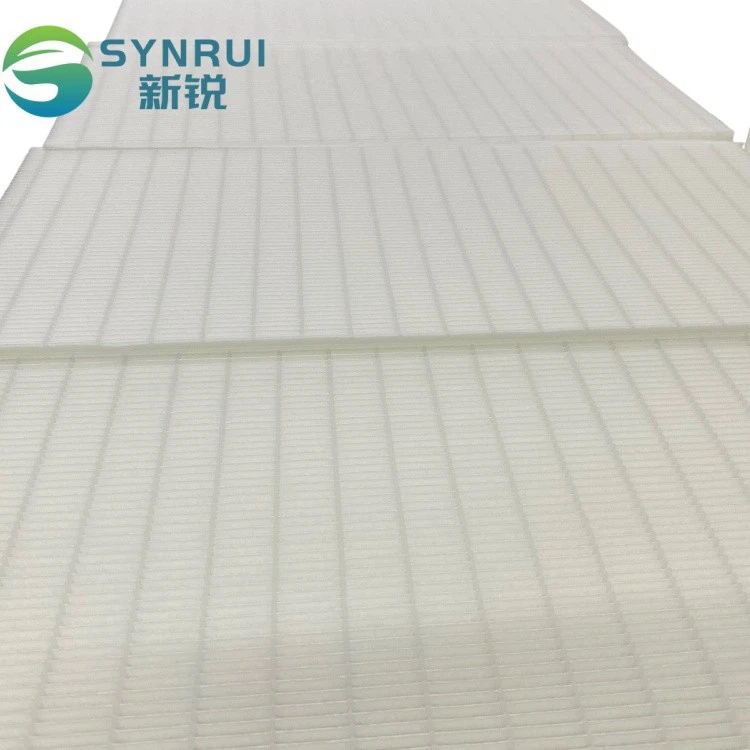
If you are looking for PTFE products for filtration applications, our PTEF Filter Media is an excellent choice. Our PTFE filter media is designed to provide high - efficiency filtration with low pressure drop. The unique properties of PTFE, including its chemical resistance and low friction, make it ideal for use in filter media.

Conclusion
In conclusion, the hardness of PTFE is an important property that affects its performance in various applications. With a typical Shore D hardness ranging from 50 to 65, PTFE is a relatively soft material, but its hardness can be adjusted through factors such as crystallinity, filler addition, and manufacturing processes.
Whether you are in the automotive, food processing, aerospace, or any other industry, understanding the hardness of PTFE can help you make the right choice when selecting PTFE products. As a PTFE supplier, we are committed to providing high - quality PTFE products and technical support to our customers. If you have any questions about PTFE hardness or need to purchase PTFE products, please feel free to contact us for further discussion and procurement negotiations.
References
- Billmeyer, F. W. (1984). Textbook of Polymer Science. Wiley - Interscience.
- Sundararaj, U., & Macosko, C. W. (1999). Morphology development in immiscible polymer blends during processing. Advances in Polymer Science, 138, 1 - 47.
- Mark, J. E. (Ed.). (2007). Physical Properties of Polymers Handbook. Springer.


