


The Core Advantages of Mini Pleat Design
Structural Innovation Delivers a Leap in Performance
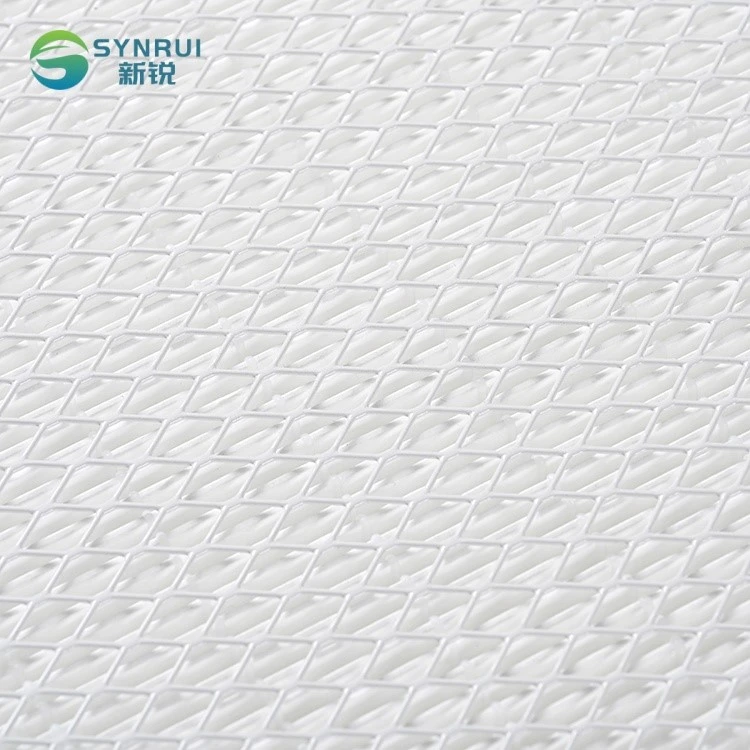
ULPA mini pleat air filters utilize hot-melt adhesive technology instead of traditional partitions. This structural innovation offers multiple significant advantages. Eliminating the partitions not only removes a fundamental source of secondary contamination but also significantly reduces airflow resistance.
Compared to traditional partitioned filters, mini pleat filters can be approximately 60% thinner while increasing airflow by over 30%, all while maintaining the same filtration efficiency. This "small yet powerful" feature is particularly well-suited for high-end cleanroom environments with limited space.
Advances in Materials Science
Modern mini pleat filters use ultrafine glass fiber or PTFE filter paper as the core filter material, combined with specially designed support and sealing layers to form a multi-layer composite structure. This structure not only ensures extremely high filtration efficiency but also maintains stability in humid environments.
Their filtration efficiency for particles as small as 0.12 microns can reach over 99.999%, far exceeding the performance of traditional partitioned filters.
Life Cycle Cost Analysis
Balancing Initial Investment and Operating Costs
Although the unit price of ULPA mini pleat air filters is generally higher than that of traditional products, their life cycle costs are significantly lower. This advantage is primarily due to three factors: lower energy consumption, longer replacement cycles, and greater system stability.
In practical applications, their reduced airflow resistance can save 15-25% on fan energy consumption. Considering that large cleanrooms can have annual electricity bills amounting to hundreds of thousands of yuan, these savings are considerable.
Significantly Reduced Maintenance Costs
The maintenance cost advantage of mini pleat filters is particularly significant. Their structural stability effectively reduces the frequency of routine adjustments and replacements, extending their average service life by 30-50% compared to partitioned filters.
Furthermore, the standardized, modular design of the filters makes replacement much easier, significantly reducing maintenance time and operational errors.
Industry Applications
ULPA Mini Pleat Air Filter
Semiconductor Manufacturing
Mini pleat filters have become standard equipment in semiconductor wafer production lines. Their high-efficiency filtration of particles as small as 0.12 microns directly impacts chip yield. After implementing these filters, chip manufacturers have seen their product defect rate drop from 0.5% to 0.08%, saving tens of millions of yuan annually.
Biomedical
Pharmaceutical companies' sterile workshops and hospital operating rooms have extremely stringent air quality requirements. ULPA mini pleat air filters not only effectively filter particulate matter but also efficiently trap bacteria and viruses, creating a truly sterile environment in critical areas. In GMP-certified pharmaceutical plants, ULPA mini pleat air filters help companies consistently meet environmental monitoring standards and effectively avoid production downtime caused by environmental issues.
Medical and Research Institutions
Hospital operating rooms, ICU, and medical laboratories are another important application area for mini pleat ULPA standard filters. Here, air quality is directly related to patient safety and the accuracy of scientific data. Studies have shown that operating rooms using mini pleat filters have post-operative infection rates over 40% lower than those using traditional filters.
Selection Guide

Determining the Appropriate Efficiency Rating
Different applications require different levels of filtration efficiency. ISO 35H is suitable for most electronics manufacturing environments, while ISO 45U is suitable for more stringent pharmaceutical and medical environments.
Selecting an efficiency rating that is too high leads to unnecessary cost increases, while selecting one that is too low may fail to meet cleanliness requirements. A professional environmental assessment is essential for making the right choice.

Consider System Compatibility
When selecting a ULPA mini pleat air filters, compatibility with existing or planned air conditioning and purification systems must be considered. This includes size compatibility, interface standards, and the ease of control system integration.
It is recommended to involve the filter supplier during the project design phase to ensure optimal interoperability among system components.
Conclusion
From performance enhancement to cost optimization, and from technological maturity to widespread application, ULPA mini pleat air filters have become the preferred solution for high-end cleanrooms. With continued advancements in manufacturing processes and growing application experience, this technology will play a key role in an even wider range of fields, contributing to cleaner air environments for both technological advancement and human health.


